Research Software Engineer,University of Zürich

Carlson M. Büth

research · software · physics

about

I am a Research Software Engineer at the Digital Linguistics Group at the University of Zürich and a PhD candidate at IFISC (CSIC-UIB) in Palma de Mallorca, Spain.

At Zürich, I develop pymovements for eye-tracking data analysis as part of the MultiplEYE EU COST Action and OpenEye. My PhD investigates delay propagation in transport systems using information theory and network science within the ARCTIC and CATSUIT projects. Originally trained in Nonlinear Physics, Complex Systems, and Quantum Field Theory, I now bridge software engineering with interdisciplinary research.

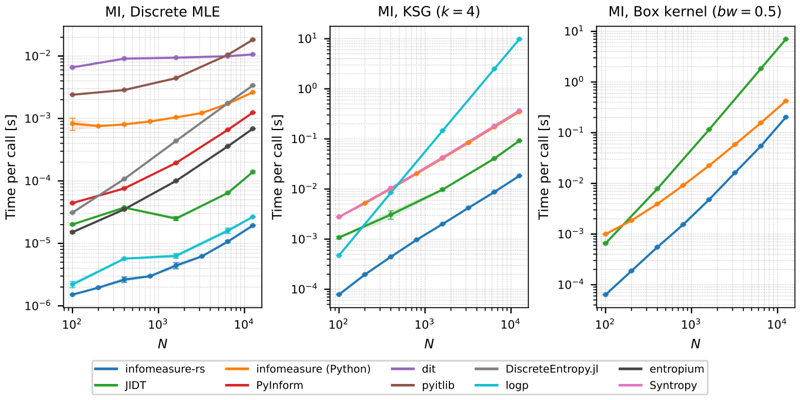
With a background spanning Physics and Computer Science, I specialize in developing open-source scientific software and scalable data analysis pipelines. I have created tools like infomeasure for information-theoretic analysis and superblockify for urban mobility planning - the latter earning first place in the VCD Award for advancing sustainable transportation.

My undergraduate theses explored Deep Inelastic e±p Scattering with Boson Exchange and Interference, Fault Injection for Robustness Testing of Satellite On-Board Image Processing (at the German Aerospace Center), and Analyzing the Network Effects of Computationally Generated Low Traffic Neighborhoods (at NERDS, ITU Copenhagen). I have also contributed to projects at TU Delft on bicycle safety and at PLUS (ETH Zürich) on biodiversity modeling for ValPar.ch.

I enjoy applying computational methods across diverse domains. If you are open to collaborate or have any questions, feel free to reach out!

selected publications

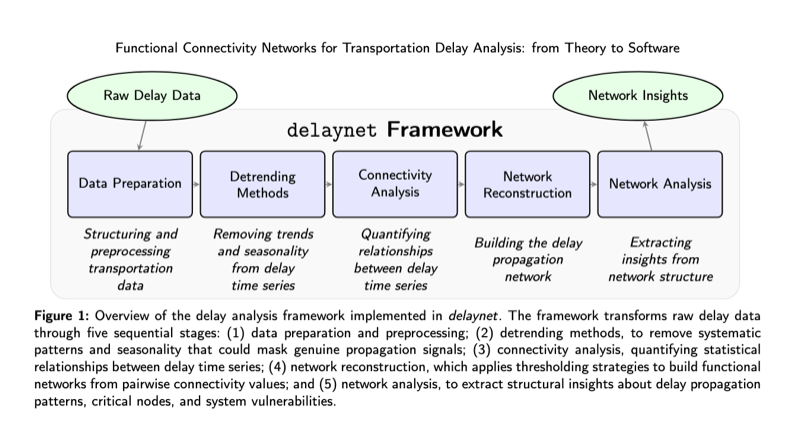
Functional Connectivity Networks for Transportation Delay Analysis: From Theory to Software

Carlson Moses Büth, Massimiliano Zanin

Transportation Research Interdisciplinary Perspectives 2026

abstract
Within the endeavour of modelling and understanding the propagation of delays in transportation networks, an approach that has attracted increasing interest in the last decade is the creation of functional network representations. These graphs map elements of interest (e.g. airports or stations) as nodes, and derive pairwise propagation patterns from their dynamics through correlation and causality tests. In spite of multiple notable results, this approach still lacks a coherent framework, with decisions related to many fundamental steps being left to the judgement of the researcher. We here provide an introduction to the theory behind functional networks for transportation systems, detailing the main steps and the associated pitfalls. We further introduce a Python package, delaynet, designed to support the researcher in the reconstruction and analysis of such networks. We finally present an analysis of the propagation of delays in the Swiss train system; and discuss future research steps.
bibtex
@article{buth2025-delaynet,
  abstract = {Within the endeavour of modelling and understanding the propagation of delays in transportation networks, an approach that has attracted increasing interest in the last decade is the creation of functional network representations. These graphs map elements of interest (e.g. airports or stations) as nodes, and derive pairwise propagation patterns from their dynamics through correlation and causality tests. In spite of multiple notable results, this approach still lacks a coherent framework, with decisions related to many fundamental steps being left to the judgement of the researcher. We here provide an introduction to the theory behind functional networks for transportation systems, detailing the main steps and the associated pitfalls. We further introduce a Python package, delaynet, designed to support the researcher in the reconstruction and analysis of such networks. We finally present an analysis of the propagation of delays in the Swiss train system; and discuss future research steps.},
  doi = {10.1016/j.trip.2026.102187},
  pages = {102187},
  volume = {39},
  journal = {Transportation Research Interdisciplinary Perspectives},
  year = {2026},
  author = {B{\"u}th, Carlson Moses and Zanin, Massimiliano},
  title = {Functional {{Connectivity Networks}} for {{Transportation Delay Analysis}}: From {{Theory}} to {{Software}}},
}

Air Transport in Africa: A Statistical Physics Approach

Pau Esteve, Carlson Moses Büth, Massimiliano Zanin

2026

abstract
Within the last few decades, concepts from statistical physics have been leveraged to shed light on different aspects of air transport, from its connectivity structure to the dynamics of delay propagation. While countless studies have been published for large markets like the US, Europe and China, much less attention has been devoted to Africa, in spite of the relevance of this transportation mode in this continent. We here analyse the African air transport system from three complementary viewpoints: the structure of the airport network; the structure created by delay propagation; and the micro-scale dynamics of delays at individual airports. These three aspects are analysed through time, from 2020 to 2024; and further compared with what is observed in the US system. The resulting scenario is highly heterogeneous, with the US and African systems having important macro-scale differences, but also similarities at a local level. We further discuss the importance of these findings, and how similar scientific endeavours could benefit from higher-quality data.
bibtex
@article{esteveAirTransportAfrica2026,
  abstract = {Within the last few decades, concepts from statistical physics have been leveraged to shed light on different aspects of air transport, from its connectivity structure to the dynamics of delay propagation. While countless studies have been published for large markets like the US, Europe and China, much less attention has been devoted to Africa, in spite of the relevance of this transportation mode in this continent. We here analyse the African air transport system from three complementary viewpoints: the structure of the airport network; the structure created by delay propagation; and the micro-scale dynamics of delays at individual airports. These three aspects are analysed through time, from 2020 to 2024; and further compared with what is observed in the US system. The resulting scenario is highly heterogeneous, with the US and African systems having important macro-scale differences, but also similarities at a local level. We further discuss the importance of these findings, and how similar scientific endeavours could benefit from higher-quality data.},
  doi = {10.1038/s41598-026-62266-z},
  shortjournal = {Sci Rep},
  journaltitle = {Scientific Reports},
  date = {2026-07-17},
  year = {2026},
  author = {Esteve, Pau and B{\"u}th, Carlson Moses and Zanin, Massimiliano},
  title = {Air Transport in {{Africa}}: A Statistical Physics Approach},
}

Preprocessing Eye-Tracking Data for Reading: A Community Survey on Practices, Challenges, and Needs

Marie-Luise Müller, Carlson Moses Büth, Deborah N. Jakobi, Daniel G. Krakowczyk, Eva Pavlinušić Vilus, Anastassia Shaitarova, Lena A. Jäger

Proceedings of the 2026 Symposium on Eye Tracking Research and Applications 2026

abstract
Preprocessing eye-tracking data is a critical yet challenging step in eye-tracking research, particularly in reading studies. Current practices are characterized by limited standardization, a strong reliance on proprietary or inflexible tools, and heterogeneous documentation routines, which hinder reproducibility, comparability, and data reuse. To systematically assess community practices and needs, we conducted a large-scale survey (N = 108) with a focus on reading research. The survey examined preprocessing workflows, tool usage, perceived challenges, data sharing and documentation strategies, and expectations regarding preprocessing tools and outputs. The findings indicate a strong demand for transparent, interoperable, and well-documented preprocessing workflows, as well as practical guidance such as tutorials and user support. Participants emphasized the importance of standardized terminology, flexible automation, and reusable output structures. These results provide an empirical basis for tool development, methodological guidelines, and infrastructure initiatives aimed at improving transparency, standardization, and long-term reusability in eye-tracking research.
bibtex
@inproceedings{mueller2026-preprocessingeyetracking,
  booktitle = {Proceedings of the 2026 Symposium on Eye Tracking Research and Applications},
  abstract = {Preprocessing eye-tracking data is a critical yet challenging step in eye-tracking research, particularly in reading studies. Current practices are characterized by limited standardization, a strong reliance on proprietary or inflexible tools, and heterogeneous documentation routines, which hinder reproducibility, comparability, and data reuse. To systematically assess community practices and needs, we conducted a large-scale survey (N = 108) with a focus on reading research. The survey examined preprocessing workflows, tool usage, perceived challenges, data sharing and documentation strategies, and expectations regarding preprocessing tools and outputs. The findings indicate a strong demand for transparent, interoperable, and well-documented preprocessing workflows, as well as practical guidance such as tutorials and user support. Participants emphasized the importance of standardized terminology, flexible automation, and reusable output structures. These results provide an empirical basis for tool development, methodological guidelines, and infrastructure initiatives aimed at improving transparency, standardization, and long-term reusability in eye-tracking research.},
  doi = {10.1145/3797246.3805480},
  publisher = {Association for Computing Machinery},
  year = {2026},
  author = {M{\"u}ller, Marie-Luise and B{\"u}th, Carlson Moses and Jakobi, Deborah N. and Krakowczyk, Daniel G. and Pavlinu\v{s}i\'{c} Vilus, Eva and Shaitarova, Anastassia and J{\"a}ger, Lena A.},
  title = {Preprocessing Eye-Tracking Data for Reading: A Community Survey on Practices, Challenges, and Needs},
}

Identifying robust area-based conservation strategies to secure ecosystem service provision under uncertainties

Benjamin Samuel Black, Antoine Adde, Nathan Külling, Carlson Büth, Manuel Kurmann, Anthony Lehmann, Florian Altermatt, Antoine Guisan, Adrienne Grêt-Regamey

Journal of Environmental Management 2026

abstract
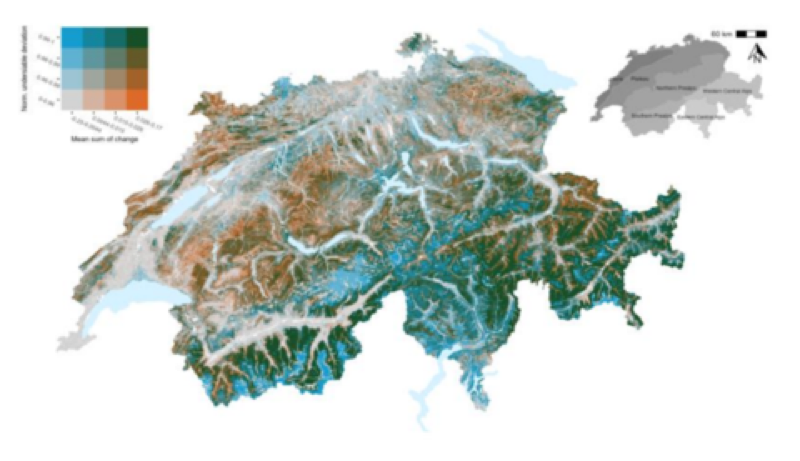
Area-based conservation remains the principal strategy for preserving biodiversity, yet current planning approaches inadequately consider two critical uncertainties: future trajectories of socio-environmental drivers of environmental degradation and preferences for alternate conservation objectives. This study demonstrates how spatial conservation prioritization can be integrated with scenario-based simulation modelling to systematically evaluate conservation strategies under these uncertainties. We simulated conservation area expansion strategies (e.g. timing and extent of interventions) in Switzerland (2020-2060) using a comprehensive full-factorial design testing approaches across five scenarios of climate change, land-use change, and conservation priorities, with strategy robustness assessed through impacts on ten ecosystem services (ES) characterized across both space and time. Results revealed substantial variation in ES provision under alternative futures, with pronounced spatial shifts in service delivery. Critically, only limited spatial overlap existed between regions displaying the highest ES robustness and areas prioritized for protection based on current ecological value, demonstrating the inadequacy of planning approaches that ignore future uncertainties. The most consistently robust strategy for securing ES provision involved rapidly expanding conservation areas to 30% coverage (aligned with the Kunming-Montreal Global Biodiversity Framework target), prioritizing small patches in human-dominated landscapes, and employing mixed management combining both preservation and restoration. However, strategy effectiveness varied across different ES and scenarios, indicating that optimal approaches must account for societal preferences regarding trade-offs between services. This research addresses a recognized gap in conservation planning science and provides both methodological guidance for uncertainty-informed planning and specific recommendations for Switzerland’s pursuit of the 30x30 target under accelerating environmental change.
bibtex
@article{black2025-IdentifyingRobustAreabased,
  abstract = {Area-based conservation remains the principal strategy for preserving biodiversity, yet current planning approaches inadequately consider two critical uncertainties: future trajectories of socio-environmental drivers of environmental degradation and preferences for alternate conservation objectives. This study demonstrates how spatial conservation prioritization can be integrated with scenario-based simulation modelling to systematically evaluate conservation strategies under these uncertainties. We simulated conservation area expansion strategies (e.g. timing and extent of interventions) in Switzerland (2020-2060) using a comprehensive full-factorial design testing approaches across five scenarios of climate change, land-use change, and conservation priorities, with strategy robustness assessed through impacts on ten ecosystem services (ES) characterized across both space and time. Results revealed substantial variation in ES provision under alternative futures, with pronounced spatial shifts in service delivery. Critically, only limited spatial overlap existed between regions displaying the highest ES robustness and areas prioritized for protection based on current ecological value, demonstrating the inadequacy of planning approaches that ignore future uncertainties. The most consistently robust strategy for securing ES provision involved rapidly expanding conservation areas to 30% coverage (aligned with the Kunming-Montreal Global Biodiversity Framework target), prioritizing small patches in human-dominated landscapes, and employing mixed management combining both preservation and restoration. However, strategy effectiveness varied across different ES and scenarios, indicating that optimal approaches must account for societal preferences regarding trade-offs between services. This research addresses a recognized gap in conservation planning science and provides both methodological guidance for uncertainty-informed planning and specific recommendations for Switzerland’s pursuit of the 30x30 target under accelerating environmental change.},
  author = {Black, Benjamin Samuel and Adde, Antoine and K{\"u}lling, Nathan and B{\"u}th, Carlson and Kurmann, Manuel and Lehmann, Anthony and Altermatt, Florian and Guisan, Antoine and {Gr{\^e}t-Regamey}, Adrienne},
  doi = {10.1016/j.jenvman.2025.128395},
  year = {2026},
  pages = {128395},
  volume = {398},
  journal = {Journal of Environmental Management},
  title = {Identifying robust area-based conservation strategies to secure ecosystem service provision under uncertainties},
}

Effectiveness of Bicycle Helmets and Injury Prevention: A Systematic Review of Meta-Analyses

Carlson Moses Büth, Natalia Barbour, Mohamed Abdel-Aty

Scientific Reports 2023

abstract
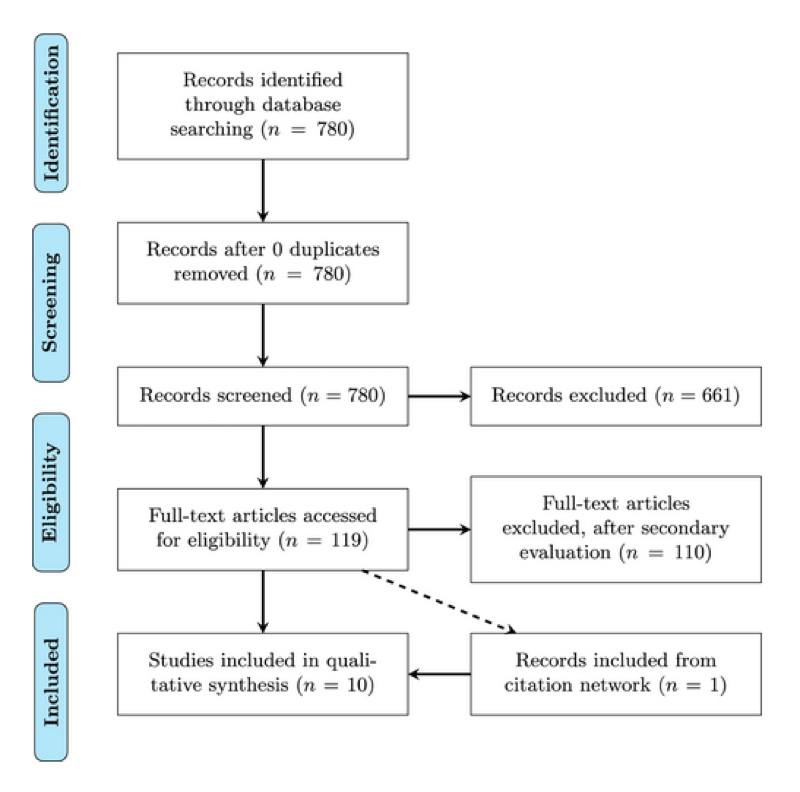
To mitigate the risk of injuries, many countries recommend bicycle helmets. The current paper seeks to examine the effectiveness of bicycle helmets by performing a systematic review focusing on meta-analyses. First, the current paper explores the findings of studies that employ meta-analyses using bicycle crash data. Second, the results are discussed considering the findings from research analyzing bicycle helmet effectiveness in a laboratory using simulation, and then are complemented with key methodological papers that address cycling and the overall factors contributing to the injury severity. The examined literature confirms that wearing a helmet while cycling is beneficial, regardless of age, crash severity, or crash type. The relative benefit is found to be higher in high-risk situations and when cycling on shared roads and particularly preventing severe head injuries. The results from the studies performed in laboratories also suggest that the shape and size of the head itself play a role in the protective effects of helmets. However, concerns regarding the equitability of the test conditions were found as all reviewed studies used a fifty-percentile male head and body forms. Lastly, the paper discusses the literature findings in a broader societal context.
bibtex
@article{buth2023,
  altmetric = {https://nature.altmetric.com/details/148986052},
  abstract = {To mitigate the risk of injuries, many countries recommend bicycle helmets. The current paper seeks to examine the effectiveness of bicycle helmets by performing a systematic review focusing on meta-analyses. First, the current paper explores the findings of studies that employ meta-analyses using bicycle crash data. Second, the results are discussed considering the findings from research analyzing bicycle helmet effectiveness in a laboratory using simulation, and then are complemented with key methodological papers that address cycling and the overall factors contributing to the injury severity. The examined literature confirms that wearing a helmet while cycling is beneficial, regardless of age, crash severity, or crash type. The relative benefit is found to be higher in high-risk situations and when cycling on shared roads and particularly preventing severe head injuries. The results from the studies performed in laboratories also suggest that the shape and size of the head itself play a role in the protective effects of helmets. However, concerns regarding the equitability of the test conditions were found as all reviewed studies used a fifty-percentile male head and body forms. Lastly, the paper discusses the literature findings in a broader societal context.},
  doi = {10.1038/s41598-023-35728-x},
  publisher = {{Nature Publishing Group}},
  pages = {8540},
  number = {1},
  volume = {13},
  journal = {Scientific Reports},
  year = {2023},
  author = {Büth, Carlson Moses and Barbour, Natalia and {Abdel-Aty}, Mohamed},
  title = {Effectiveness of Bicycle Helmets and Injury Prevention: A Systematic Review of Meta-Analyses},
}

all publications →